

The effect of vibro-compaction on soft soil reinforcement
Published Time:
2021-04-15
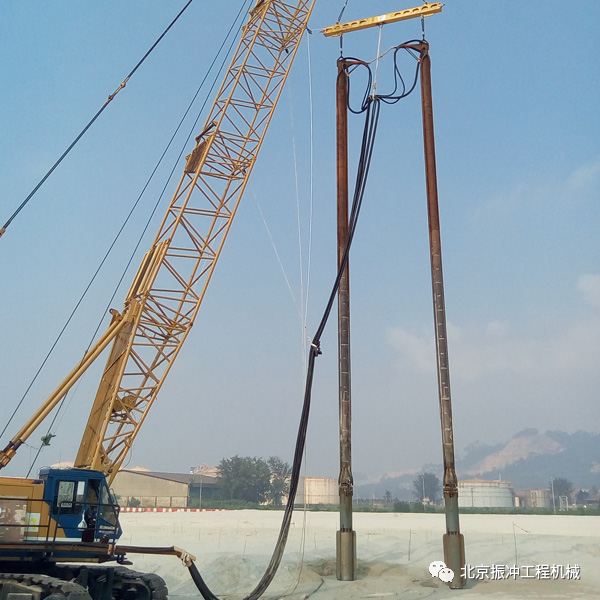
Gravel piles, a type of loose pile, primarily use unbound gravel (pebbles) as their material. They are formed by creating a hole in weak subgrade using vibration, impact, or water jetting, then compacting gravel (pebbles) into the hole to create a large-diameter, dense pile body. This forms a composite foundation strengthened by gravel piles and the soil between them. Based on the pile construction process, they can be divided into two categories: vibro-replacement (wet method) gravel piles and dry method gravel piles. Gravel piles constructed using a vibrating water jetting method are called vibro-replacement gravel piles or wet method gravel piles. Gravel piles constructed using various waterless methods (such as dry vibration, vibro-compaction, hammering, etc.) are collectively called dry method gravel piles. Piles made with materials such as gravelly sand, coarse sand, medium sand, rounded gravel, angular gravel, pebbles, and crushed stone are called stone piles.
The vibratory water jetting method, with its modern vibratory equipment prototype, was designed and manufactured by Keller Company of Germany in 1937 and successfully used to densify sand and stone foundations. In the early 1960s, the vibratory method began to be used to strengthen cohesive soil foundations; because the material used was gravel, it was called a gravel pile. China began applying the vibratory method in 1977.
The effect of vibratory methods on soft soil reinforcement
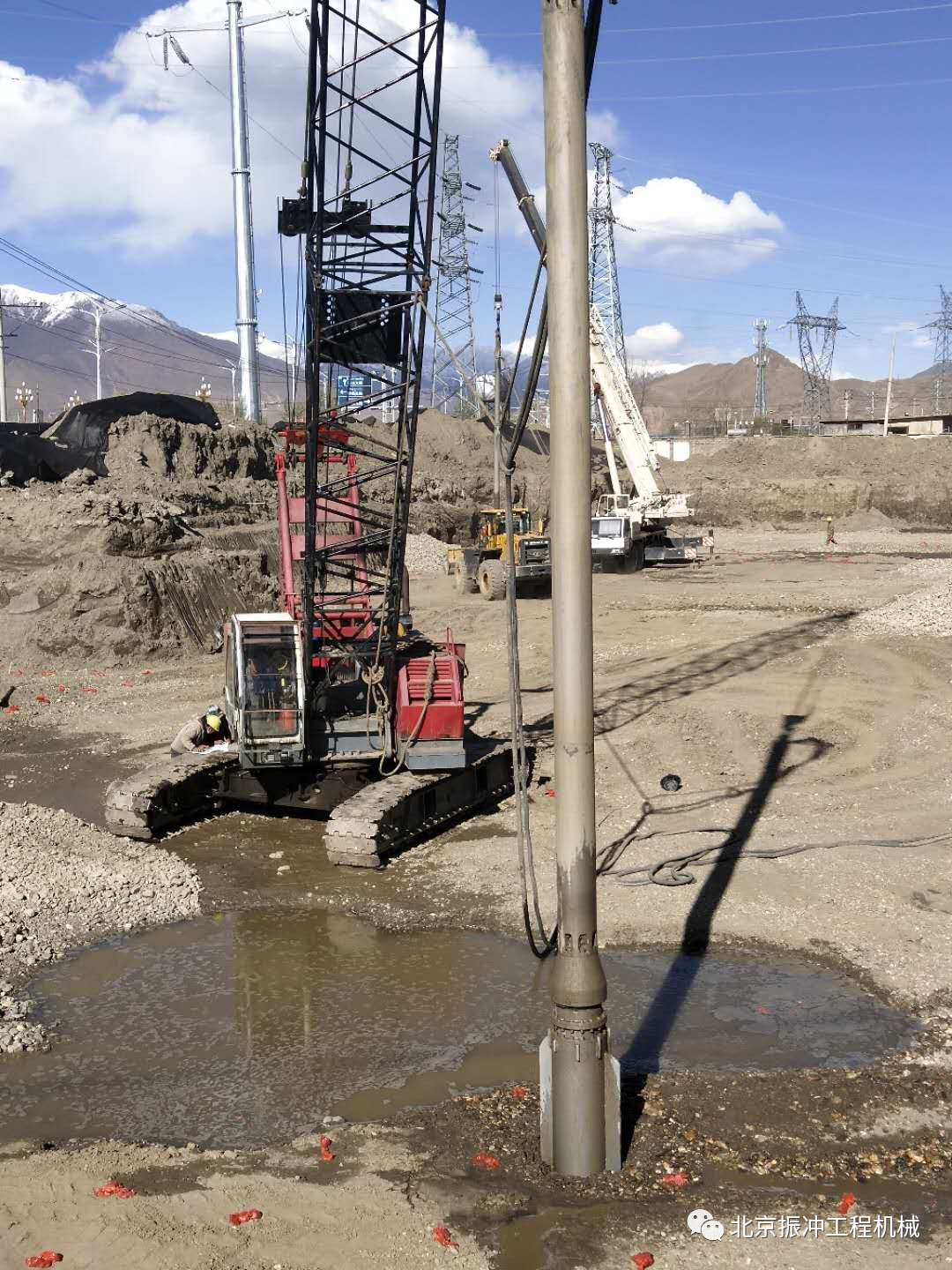
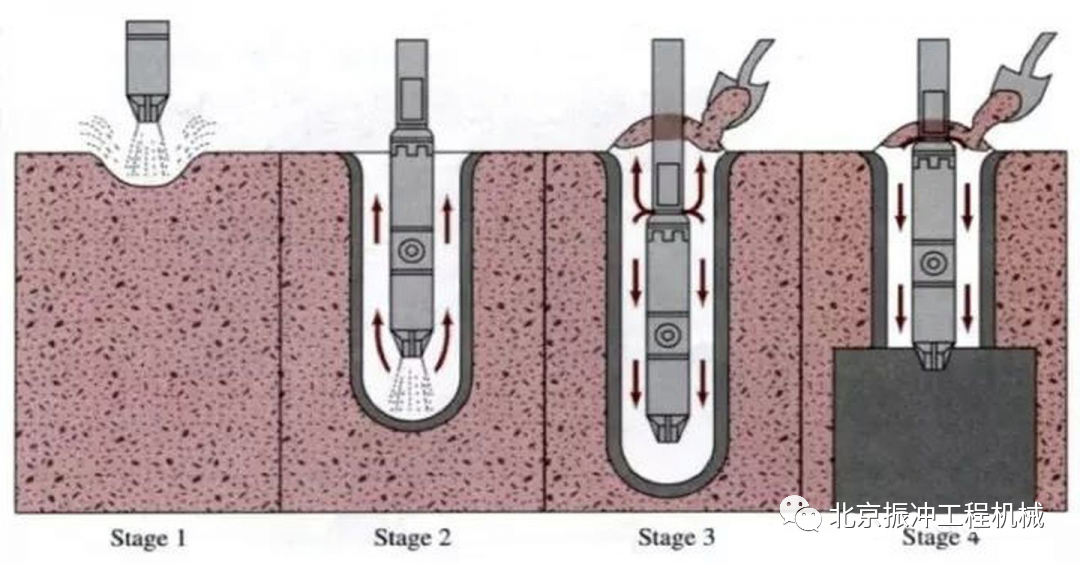
The vibratory method is a shortened term for vibratory water jetting method. It involves using a crane to lift a vibratory device. After starting the submersible motor, the eccentric block drives the vibratory device to generate high-frequency vibrations. Simultaneously, the water pump is started, and high-pressure water is ejected. Under the combined action of vibration and jetting, the vibratory device is driven to a predetermined depth in the soil. After cleaning the hole, gravel can be gradually filled into the hole from the ground. Each section of fill material is compacted by vibration. After reaching the required density, the vibratory device is lifted, and this process is repeated until the fill and compaction reach the ground, thus forming a large-diameter, very dense pile body in the foundation, thereby strengthening the soft foundation.
1. Reinforcement mechanism for cohesive soil
For cohesive soil foundations (especially saturated soft soil), due to the high clay content and strong inter-particle bonding, the permeability is low. Under the action of vibration, the water in the soil is difficult to drain; therefore, the role of gravel piles is not to compact the foundation, but to replace it. During construction, the vibratory device uses its own weight, horizontal vibration, and high-pressure water to transform the cohesive soil into mud and water, which is discharged from the hole, forming a hole slightly larger than the diameter of the vibratory device. Gravel is poured into the hole, and under the lateral force of the vibratory device, the gravel is squeezed into the surrounding hole to form a pile body with a certain density and large diameter. It constitutes a composite foundation with the original clay and works together. Because the stiffness of the gravel pile is much greater than that of the surrounding cohesive soil, the stress in the foundation is redistributed according to the material deformation modulus. Therefore, most of the load is borne by the gravel pile. The ratio of pile stress to inter-pile cohesive soil stress is called the pile-soil stress ratio, generally 3–5. Although it does not improve the bearing capacity of the cohesive soil, the bearing capacity of the entire foundation is improved. Gravel piles are sometimes also used to improve the anti-sliding ability of slopes. At this time, the role of the pile, like a general anti-sliding pile, is to improve the shear strength of the soil, forcing the sliding surface to move away from the slope surface and move deeper.
2. Reinforcement mechanism for sandy soil
In sandy soil, gravel piles mainly play a densification role, primarily to improve the bearing capacity of the foundation soil, reduce deformation, and increase liquefaction resistance. During the construction of gravel piles, saturated loose sand particles are rearranged and compacted under strong high-frequency forced vibration. After a large amount of coarse aggregate is filled into the vibrated hole, it is squeezed into the surrounding soil by strong horizontal vibration. This forced compaction increases the relative density of the sand, reduces the porosity, increases the dry soil density and internal friction angle, improves the physical and mechanical properties of the soil, and significantly improves the bearing capacity of the foundation (generally 2–5 times higher). In addition, due to the significant increase in the width of the foundation and the corresponding increase in the relative density, the liquefaction resistance is also improved.
Related News
Follow us

Tel:+86-18201288462
Email:lsn@bjvibro.com
Address: Songzhuang Cultural Park, Beijing sub-center - Xiaobao Art District